
Your Definitive Guide to the Chef’s Table Dining Experience on a Cruise
Posted on 22nd Apr, 2026
The VIP Treatment: Learn why the Chef’s Table is more than just a meal, often including "backstage" access to the galley and a hosted evening with the Executive Chef.
Top Line Picks: A look at the standout experiences from Princess Cruises, Royal Caribbean, and Carnival.
Booking Secrets: Why you need to move fast to secure one of these limited spots and how to handle dietary requirements.
If the Main Dining Room is the heart of the ship’s social life, the Chef’s Table is its most guarded secret. It is the pinnacle of onboard dining—an intimate, multi-course journey that goes far beyond a standard menu.
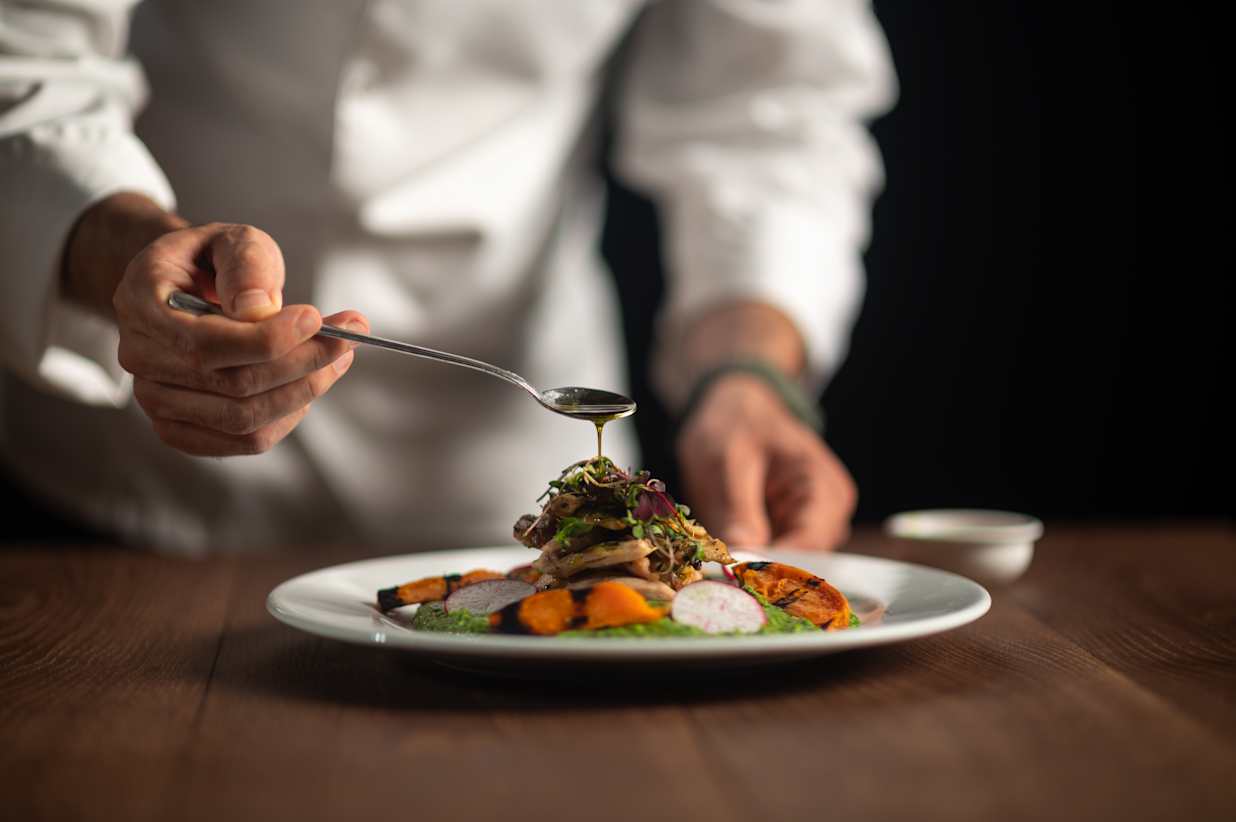
As cruise lines continue to push the boundaries of "gastronomic storytelling," the Chef’s Table has evolved from a simple dinner into a full-blown theatrical event. If you consider yourself a true "foodie," this is the one reservation you cannot afford to miss.

What Exactly is a Chef’s Table?
To truly understand the Chef’s Table, you have to think of it as a "culinary backstage pass." It is less of a standard dinner and more of a curated performance where the boundary between the kitchen and the dining room disappears.
If you are looking for more than just a meal, here is a deeper dive into the layers that make this experience so unique.
1. The Behind-the-Scenes Access
On most lines, the evening doesn’t begin at a table. Instead, guests meet for a glass of champagne and hors d'oeuvres before being escorted into the Galley—the ship's engine room of flavour.
This is a rare "behind-the-scenes" look at the staggering scale of cruise ship catering. You’ll see the pastry station where thousands of rolls are baked daily, the specialised butchery, and the frantic, silent precision of the line cooks.
The Executive Chef often shares fascinating "galley stats" here, such as the thousands of pounds of butter or tens of thousands of eggs used during a single week at sea.

2. A Dedicated Culinary Performance
Once seated—often in a private dining room, a library, or a shielded "Lumiere" zone—the meal begins. The Chef’s Table is as much an educational event as it is a dinner.
The Chef's Insight: Before each course is served, the Chef will explain the "why" behind the dish. You might learn about the specific farm where the Wagyu was sourced or the 48-hour reduction process used for the jus.
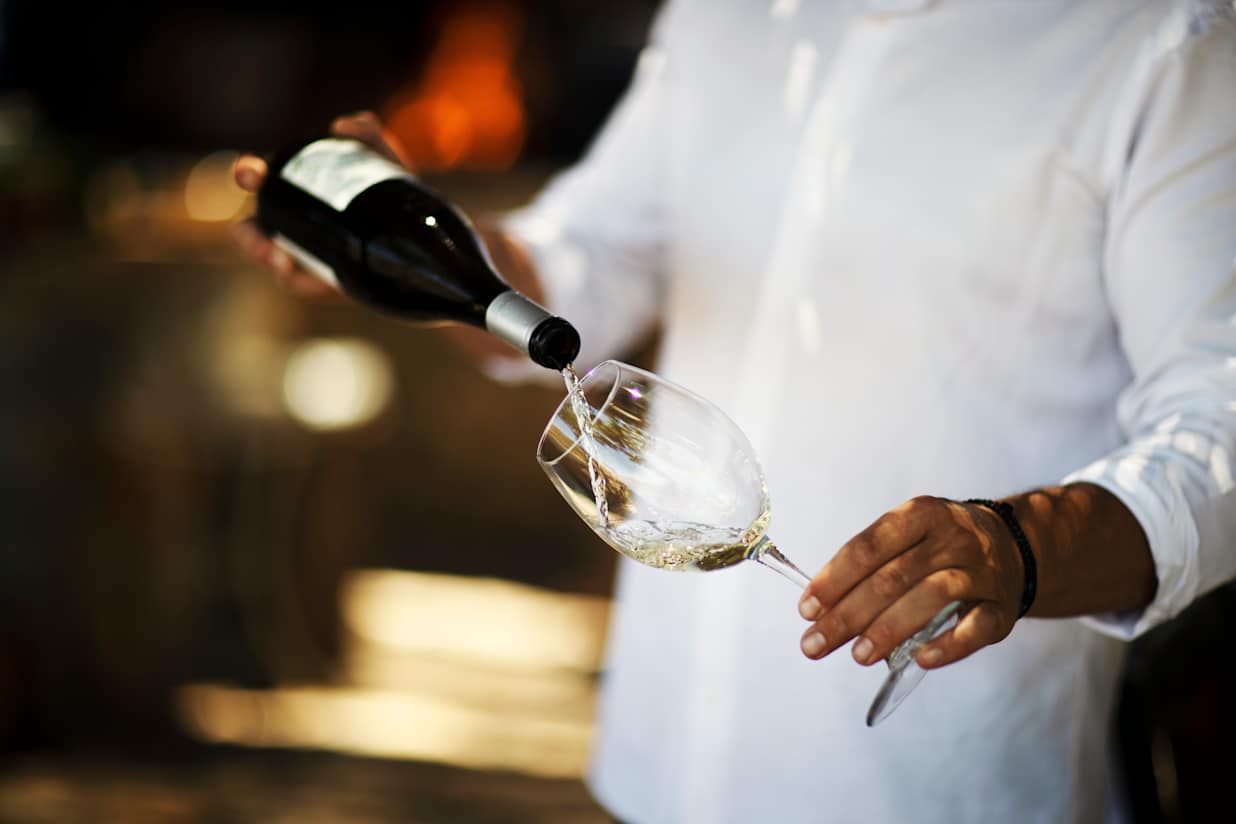
The Sommelier’s Synergy: The Head Sommelier is almost always present to explain the wine pairings. You’ll learn how the acidity of a specific Sauvignon Blanc cuts through the richness of a scallop carpaccio, or why a heavy red was chosen for a delicate dessert.

3. Menus You Won't Find Anywhere Else
The most important thing to know about the Chef's Table is that the menu is exclusive. You cannot find these dishes in the Main Dining Room or even the other speciality restaurants.
These are "passion projects" for the culinary team—dishes that are too complex or use ingredients too rare to be served to 3,000 people.
Expect experimental techniques like:
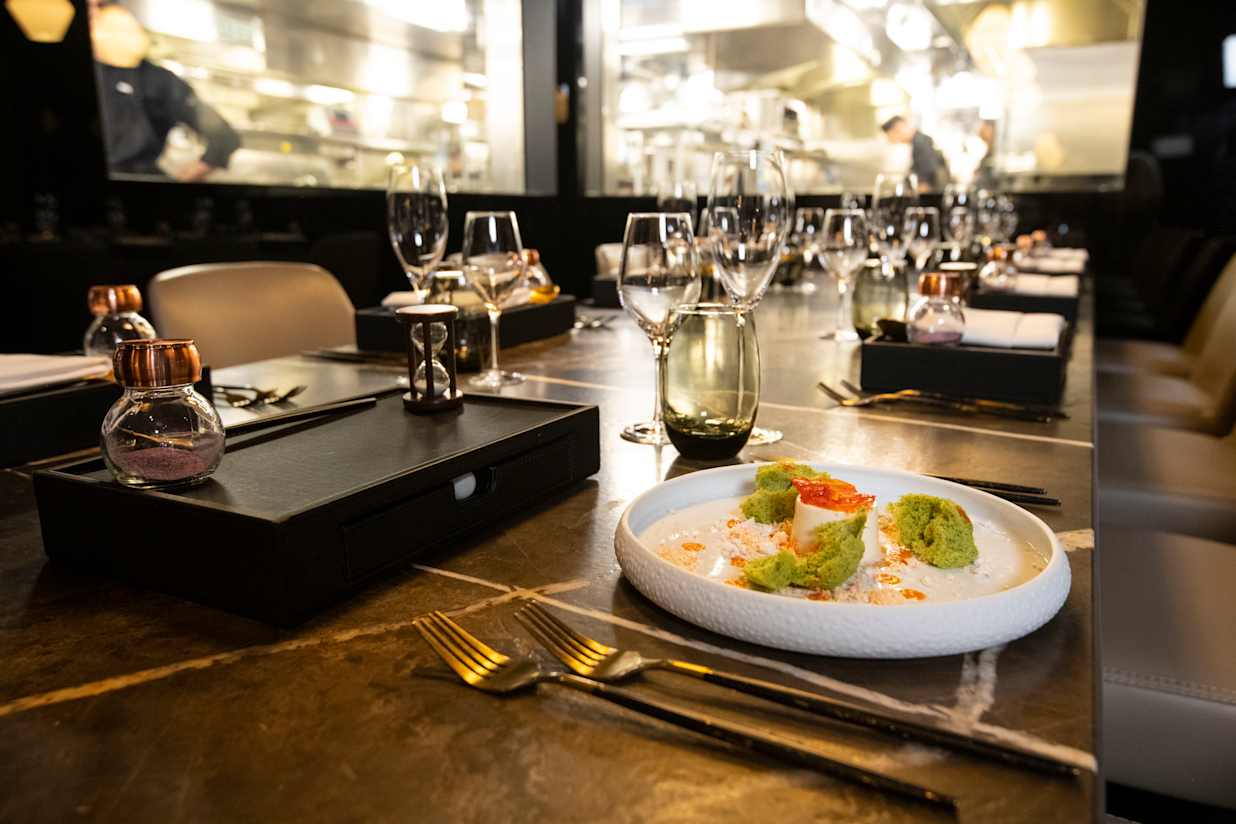
Molecular Gastronomy: Spherified juices, "basil moss," or elderflower caviar.
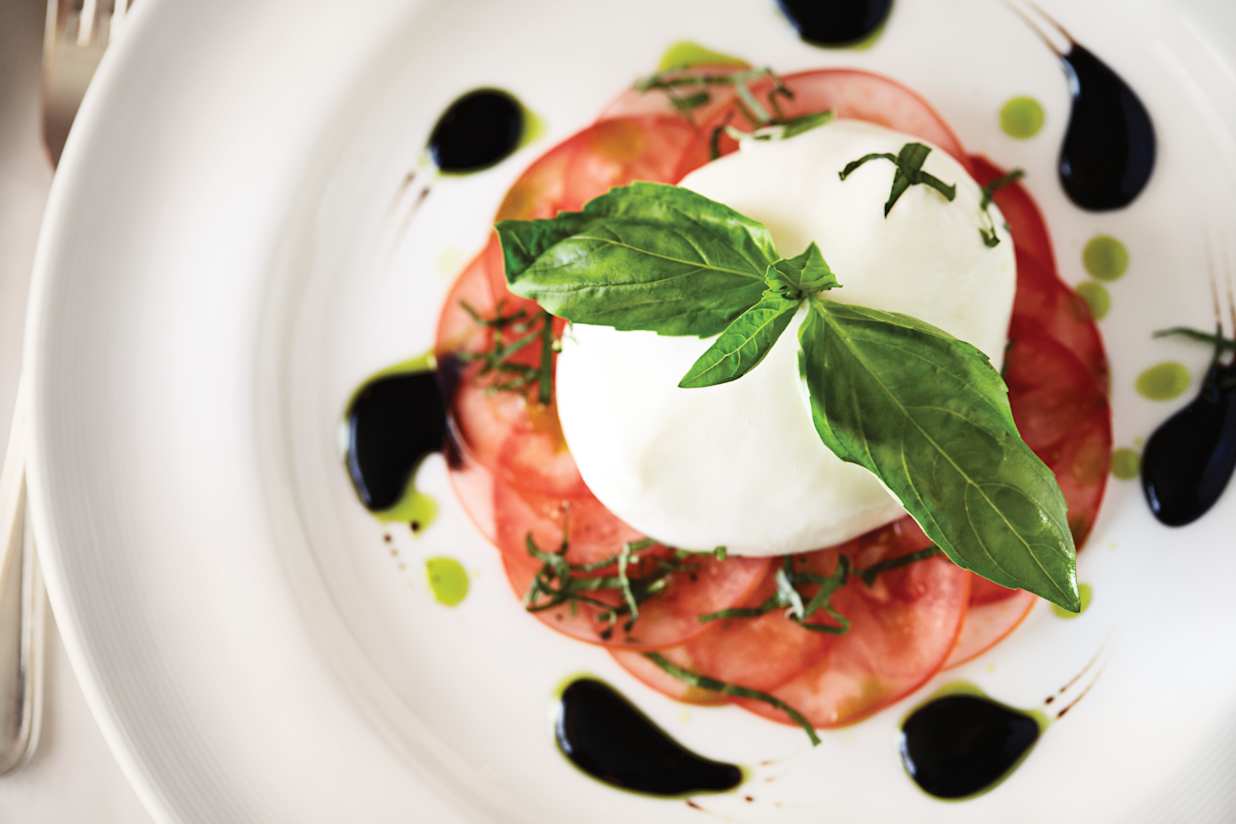
Plating Artistry: Each dish is constructed with the precision of a painting, often featuring edible flowers, custom-blown sugar work, or dramatic smoke effects.
4. The Social Connection
Because the group is so small (usually just 10 to 14 people), the atmosphere quickly shifts from formal to social. By the third or fourth course, the table is usually filled with laughter and shared stories. It is one of the best ways to meet fellow travellers who share a genuine passion for food and wine.

Standout Chef’s Table Experiences
Princess Cruises: Chef’s Table Lumiere
Princess is widely credited with "inventing" the modern Chef’s Table at sea. On their Royal-class and Sphere-class ships, they offer Chef’s Table Lumiere.
Guests are seated at a stunning custom glass table surrounded by a "curtain of light"—a shimmering wall of fibre optics that creates a private sanctuary in the middle of the dining room.
The Vibe: Pure elegance and high-end tradition.

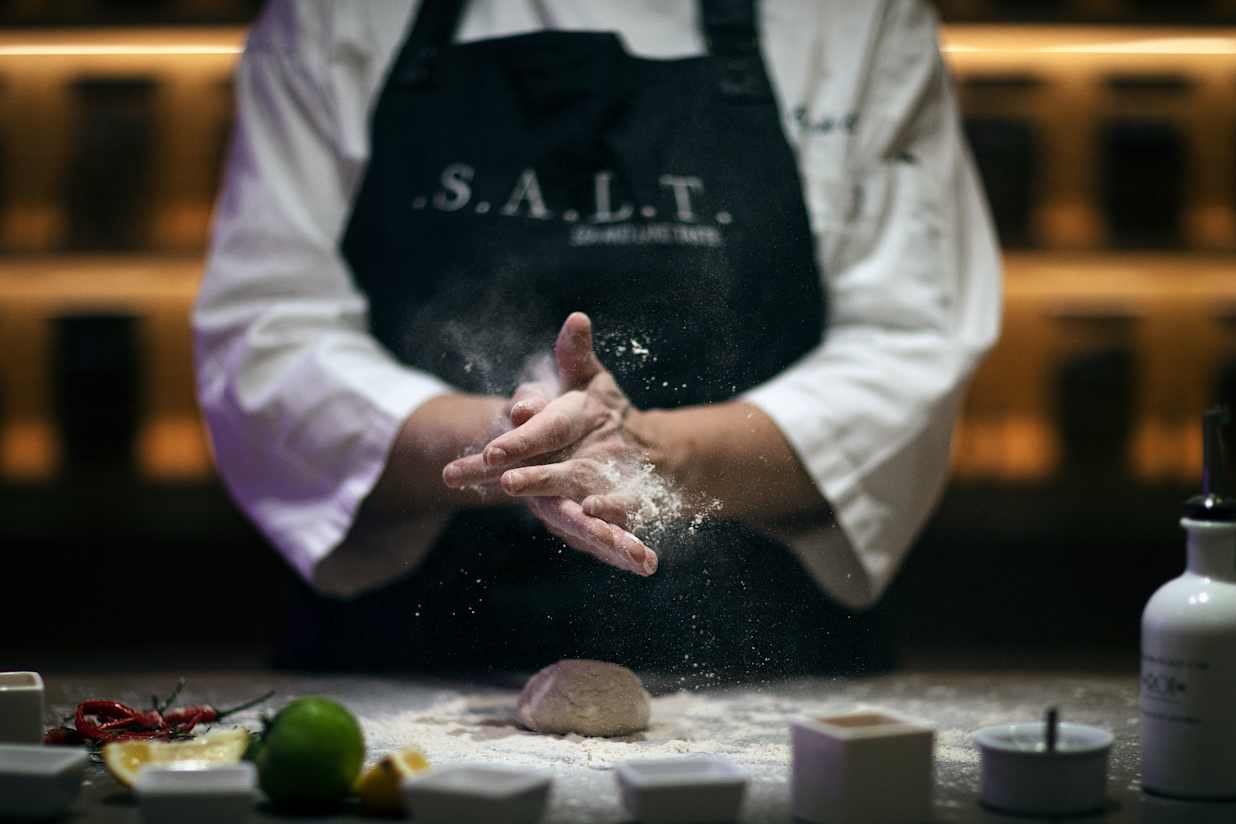
Silversea: S.A.L.T. Chef’s Table
For those who want their meal to reflect the horizon, Silversea’s S.A.L.T. (Sea and Land Taste) Chef’s Table is an industry-leading experience.
Located within the S.A.L.T. Lab, this intimate dining encounter focuses entirely on the region the ship is currently sailing through.
The menu changes constantly, using locally sourced ingredients and traditional techniques from the day’s port of call.
The Vibe: Immersive, educational, and ultra-luxury.
Carnival Cruise Line: The Galley Feast
Carnival’s version is famously high-energy. It usually begins with cocktails and hors d'oeuvres inside the actual galley, where you can watch the culinary team in action.
The meal then moves to a private dining room for a series of highly creative, modern dishes that you won't find anywhere else on the ship.
The Vibe: Immersive, social, and surprisingly sophisticated.

Royal Caribbean: An Intimate Affair
Royal Caribbean focuses on the intimacy of the meal. Held in a dedicated, wood-panelled room, the focus here is on the harmony between the five-course menu and the world-class wine pairings. It is often cited as one of the most formal and "hushed" experiences on the ship.
The Vibe: Formal, educational, and very refined.

Essential Tips for Securing Your Seat
1. Book the Moment You Board (or Sooner)
Chef’s Table sessions are often held only once or twice per voyage. With only a dozen seats available, they sell out almost instantly.
If your cruise line allows pre-booking via their app, do it the second the window opens. If not, make the speciality dining desk your very first stop upon embarkation.

2. Check the Dress Code
Because this is a flagship dining event, the dress code is usually Formal or Elegant Chic. Men will typically need a jacket, and ladies often opt for cocktail attire. You are dining with the Executive Chef, after all; it is worth dressing the part.

3. Communicate Allergies Early
Because the menu is a set "tasting" experience, the chefs prepare the ingredients well in advance. While they are usually happy to accommodate allergies, you must inform the dining team at least 24–48 hours before the event.

4. Factor in the Time
This isn't a quick bite before the 8:00 PM show. A Chef’s Table experience typically lasts between 2.5 and 3.5 hours. It is an evening-long event designed to be savoured, so do not book any other entertainment for that night.

Is it Worth the Extra Cost?
Chef’s Table experiences typically carry a supplement, though on ultra-luxury lines like Silversea, the inclusion of such experiences can vary by ship and suite category. On mainstream lines, the supplement usually ranges from £70 to £120 per person. While this might seem steep, consider what is included:
A multi-course gourmet meal (often 5–7 courses).
Unlimited premium wine pairings.
A signed cookbook or a photo with the Chef (frequent "souvenirs" of the night).
A private tour of the galley.
When you compare the price to a similar "Chef’s Tasting Menu" at a Michelin-starred restaurant on land, the cruise version often represents incredible value for money.
The Chef’s Table is more than just dinner; it is an education in what it takes to feed thousands of people at the highest possible standard while in the middle of the ocean. It is a chance to ask questions, taste rare ingredients, and feel like the most important person on the ship for a few hours.
Author: Naomi Allen
Role: Junior Content Editor
Why book with Cruise.co.uk?
The cruise experts
- Established in 1984
- Your own dedicated expert cruise consultant
- Unrivalled cruise knowledge and unbiased advice
- Personal tailor-made service
Best price guarantee
- Early bird access to the best offers
- No hidden extras
- Best price reassurance with our Price Match Guarantee
- Low deposits and flexible payment options
Widest range of cruises
- Easy to find all the latest deals
- Exclusive range of curated Cruise & Stay holidays
- Choose Tailor-made or Bucket list Cruise & Stay Collections
- Escorted Tours Available
Book with confidence
- UK-based company
- Award-winning service
- Our customers have rated us 5‑star on Trustpilot
- ABTA / ATOL protected for your peace of mind
Get help from people who love to cruise
Opening hours
| Mon - Sat | 9am - 10pm |
|---|---|
| Sun | 10am - 9pm |
Sign up for our newsletter
For further details, please read our privacy policy





Registered Office: Grosvenor House, Prospect Hill, Redditch, B97 4DL, UK Company Reg Number: 01827977 © 2026 Cruise.co.uk. All Rights Reserved