
The Best Stargazing Cruises For Cosmic Explorers
Posted on 7th Aug, 2026
Unrivalled Ocean Darkness: Sail far from city light pollution to experience pristine 360-degree views of night-sky constellations and cosmic phenomena.
Prime Dark-Sky Routes: Explore top stargazing regions including Arctic Norway, the Canary Islands, Hawaii, and deep-ocean Transatlantic crossings.
Celestial Onboard Expertise: Enjoy voyages featuring onboard planetariums, guest astronomers, dark-deck policies, and night-sky lectures.
For centuries, mariners navigated the globe solely by reading the positions of the stars. Today, a growing community of travellers is rediscovering the magic of the night sky from the open deck of a cruise ship.
Driven by a major rise in "astrotourism" and "noctourism", travel dedicated to experiencing dark skies and celestial wonders, stargazing and astronomy-themed cruises are growing rapidly in popularity.
Away from the glare of urban streetlights, industrial smog, and neon horizons, the open sea provides some of the purest dark-sky conditions on Earth.
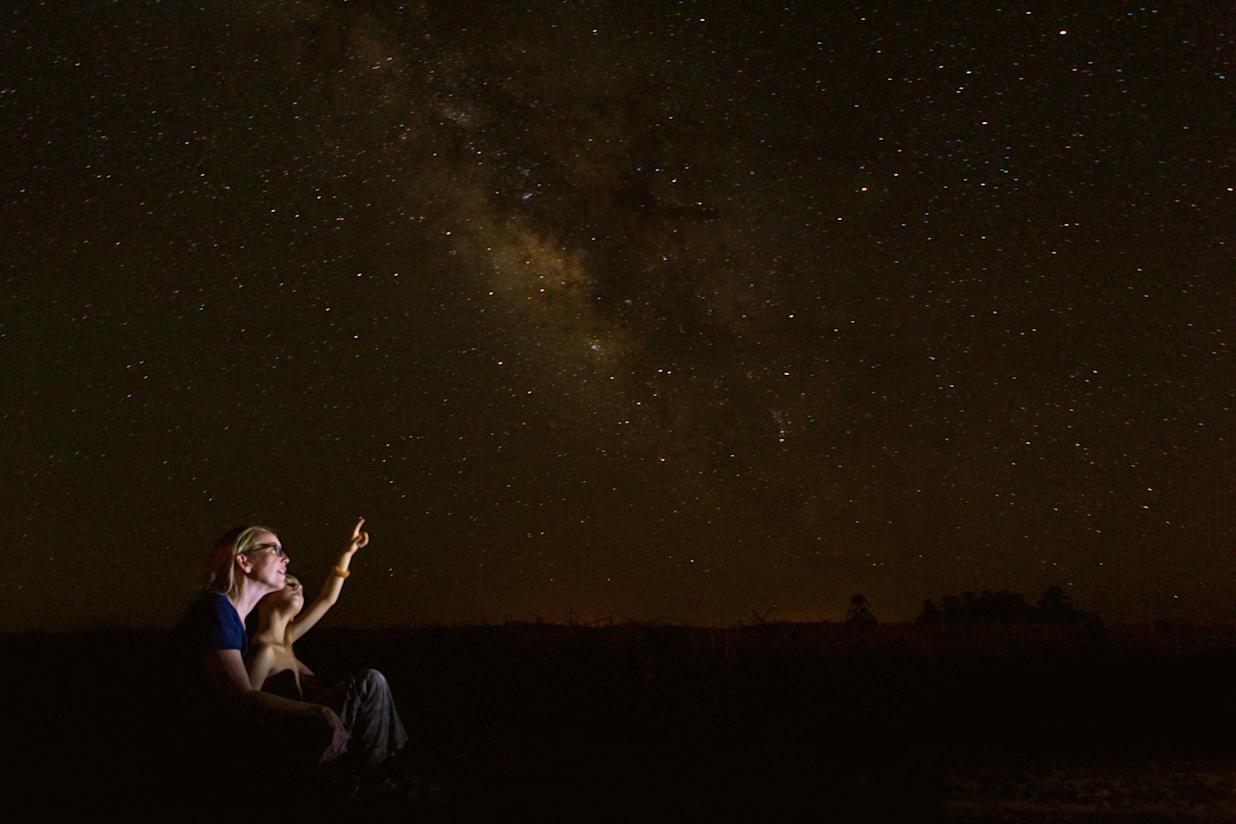
Whether you want to witness the dancing ribbons of the Northern Lights, track Southern Hemisphere constellations, or listen to lectures by veteran astronomers, a dedicated stargazing cruise offers a front-row seat to the cosmos.
Here is our guide to the best stargazing cruises and itineraries for space enthusiasts.

Why Stargazing At Sea Is Truly Unmatched
Observing the night sky from a cruise ship offers clear physical advantages over land-based stargazing. When a ship sails dozens of miles off the coast into deep water, artificial light pollution drops to near zero.
On a clear night, the sky transforms into a velvet canvas blanketed with thousands of stars, distant galaxies, and the bright band of the Milky Way.

Cruise ships also offer an unobstructed 360-degree horizon without mountain ranges, tall buildings, or trees blocking the view.
Cruisers can relax in total comfort with hot beverages, luxury lounges, fine dining, and warm staterooms just a short walk from the top deck.

Top Stargazing Cruise Destinations & Itineraries
Norwegian Arctic & Northern Lights Voyages
Sailing high above the Arctic Circle during the winter months places you directly beneath the Auroral Oval, the prime zone for Northern Lights activity.
Away from city lights, the sky comes alive with luminous green and violet curtains created by charged solar particles colliding with Earth's atmosphere.

British favourite lines like P&O Cruises, Fred. Olsen Cruise Lines, and Hurtigruten offer dedicated winter aurora itineraries departing directly from UK ports such as Southampton, Newcastle, and Rosyth.
Ships dock in high-latitude Norwegian ports like Tromsø, Alta, and Svalbard, where guests can step off the gangway directly into dark-sky wilderness or join guided snowmobile stargazing tours.

The Canary Islands & Starlight Reserves
The Canary Islands are internationally recognised for having some of the cleanest and clearest skies in the Northern Hemisphere.
Protected by strict light-pollution laws, islands like Tenerife and La Palma serve as global hubs for scientific astronomy.

Canary Islands cruise itineraries, widely offered roundtrip from Southampton by Cunard, P&O Cruises, and Celebrity Cruises, allow travellers to combine warm ocean sailing with celestial exploration.
Excursions bring guests into Mount Teide National Park or the La Palma Starlight Reserve for guided night-sky observation high above the clouds.

Transatlantic Crossings & Deep-Ocean Darkness
A Transatlantic crossing between the UK and North America offers several consecutive days in total ocean isolation.
Hundreds of miles from the nearest landmass, the ocean night sky reveals faint deep-sky objects, star clusters, and meteors that are invisible from land.

Cunard Line's flagship, Queen Mary 2, is the ultimate purpose-built ocean liner for this journey. She features Illuminations, the only full-scale planetarium at sea, where guests can watch high-definition cosmic shows during the day before heading to the top deck for real-time stargazing at night.

Hawaii & South Pacific Celestial Routes
Crossing the Pacific Ocean opens up the southern night sky, granting northern travellers their first views of iconic celestial markers like the Southern Cross, the Large and Small Magellanic Clouds, and Alpha Centauri.
Transpacific and Hawaiian cruise itineraries calling at Hilo or Kona on the Big Island offer shore excursions to the Mauna Kea Visitor Information Station, positioned 2,800 metres above sea level.
On the open sea between islands, low humidity and clear tropical air create ideal conditions for watching satellite passes and shooting stars from the ship's upper promenade.

Onboard Features & Special Celestial Programming
When choosing an astronomy-focused cruise holiday, look for itineraries that highlight specialised onboard programming.
Premier celestial voyages bring guest speakers on board, including NASA veterans, Royal Astronomical Society fellows, and university astrophysics professors who give daily lectures.
Select ships also enforce designated dark-deck hours during special celestial events like meteor showers. By dimming non-essential top-deck lighting, the crew creates an optimal dark-adapted viewing environment for passengers gathered on the observation decks.
Frequently Asked Questions
What is the best time of year for a stargazing cruise?
Winter and autumn months are ideal for high-latitude stargazing, such as Northern Lights cruises in Norway, due to long nights and extended darkness. For ocean stargazing in tropical regions like Hawaii or the Canaries, sailings are excellent year-round.
Which cruise ship has a planetarium on board?
Cunard’s Queen Mary 2 features Illuminations, a state-of-the-art planetarium at sea that offers immersive astronomical shows, visual lectures, and 3D space documentaries.
Does ship movement make it hard to use a telescope on board?
While ship motion can make high-magnification tripod telescopes tricky to stabilise, binoculars and naked-eye viewing work brilliantly. Many onboard astronomers use specialised wide-field optical equipment and handheld laser pointers to guide guests through the constellations.
Are there no-fly stargazing cruises departing from the UK?
Yes. P&O Cruises, Cunard, Fred. Olsen Cruise Lines, Ambassador Cruise Line, and Celebrity Cruises routinely offer stargazing and Northern Lights itineraries departing directly from UK ports including Southampton, Portsmouth, Newcastle, Dover, and Dundee.
Do I need to bring special equipment on a stargazing cruise?
No special equipment is required. The lack of light pollution at sea allows you to view thousands of stars, planets, and meteor showers with the naked eye. Bringing a compact pair of stargazing binoculars can help you explore star clusters and the lunar surface in greater detail.
Can you see meteor showers from a cruise ship deck?
Yes. Mid-ocean sailings occurring during peak shower windows, such as the Perseids in August or the Geminids in December, offer exceptional views of shooting stars against pitch-black skies without city light pollution.
What is a dark-deck policy on a cruise ship?
A dark-deck policy is when a cruise line temporarily turns off or dims non-essential exterior lighting on top decks at night. This eliminates glare and allows passengers' eyes to fully adapt to the dark for superior night-sky viewing.
Are stargazing cruises suitable for beginners?
Absolutely. Most stargazing cruises cater to curious beginners as well as avid amateurs, offering introductory talks, constellation tours using laser pointers, and guided deck sessions led by expert guest astronomers.
Author: Naomi Allen
Role: Junior Content Editor
Why book with Cruise.co.uk?
The cruise experts
- Established in 1984
- Your own dedicated expert cruise consultant
- Unrivalled cruise knowledge and unbiased advice
- Personal tailor-made service
Best price guarantee
- Early bird access to the best offers
- No hidden extras
- Best price reassurance with our Price Match Guarantee
- Low deposits and flexible payment options
Widest range of cruises
- Easy to find all the latest deals
- Exclusive range of curated Cruise & Stay holidays
- Choose Tailor-made or Bucket list Cruise & Stay Collections
- Escorted Tours Available
Book with confidence
- UK-based company
- Award-winning service
- Our customers have rated us 5‑star on Trustpilot
- ABTA / ATOL protected for your peace of mind
Get help from people who love to cruise
Opening hours
| Mon - Sat | 9am - 10pm |
|---|---|
| Sun | 10am - 9pm |
Sign up for our newsletter
For further details, please read our privacy policy





Registered Office: Grosvenor House, Prospect Hill, Redditch, B97 4DL, UK Company Reg Number: 01827977 © 2026 Cruise.co.uk. All Rights Reserved