
The Best Cruises For People Who Get Seasick
Posted on 11th Aug, 2026
100% Motion-Free River Cruising: Discover why river sailings with lines like Viking, Riviera Travel, Avalon, and Emerald offer zero ocean swells or rolling motion.
Advanced Mega-Ship Stability: Explore how massive modern vessels like Royal Caribbean's Icon Class and MSC World Class eliminate wave motion using computerised stabilisers.
Sheltered Coastal Passages: Sail glass-like waters across protected routes like Alaska's Inside Passage and the deep Norwegian Fjords.
For many prospective travellers, the fear of motion sickness is the single biggest hurdle preventing them from booking a holiday on the water.
The thought of swaying decks and rolling waves can make even the most exciting itinerary feel daunting. However, getting seasick is by no means an inevitable part of cruising.

Thanks to modern naval engineering, advanced satellite weather forecasting, and a vast array of sheltered inland itineraries, you can enjoy a world-class cruise holiday without ever worrying about losing your sea legs.
Whether you choose completely wave-free river waterways or protected coastal passages on colossal modern vessels, here is your definitive guide to the best smooth-sailing cruises.

The Ultimate Seasickness-Proof Option: River Cruising
If you are extremely sensitive to motion or want a 100% guarantee against seasickness, river cruising is the ultimate solution.
Unlike ocean ships that navigate open seas, river vessels sail along flat, calm inland waterways such as the Rhine, Danube, Main, Seine, Douro, and Nile.

Because rivers do not produce ocean swells or waves, river ships experience zero rolling or pitching motion. Land is perpetually in sight on both sides of the vessel, providing a fixed visual horizon that prevents the inner-ear confusion that causes motion sickness.
Furthermore, river ships dock directly in the heart of historic towns and cities, meaning you spend maximum time exploring ashore and zero time negotiating open water.

Viking River Cruises
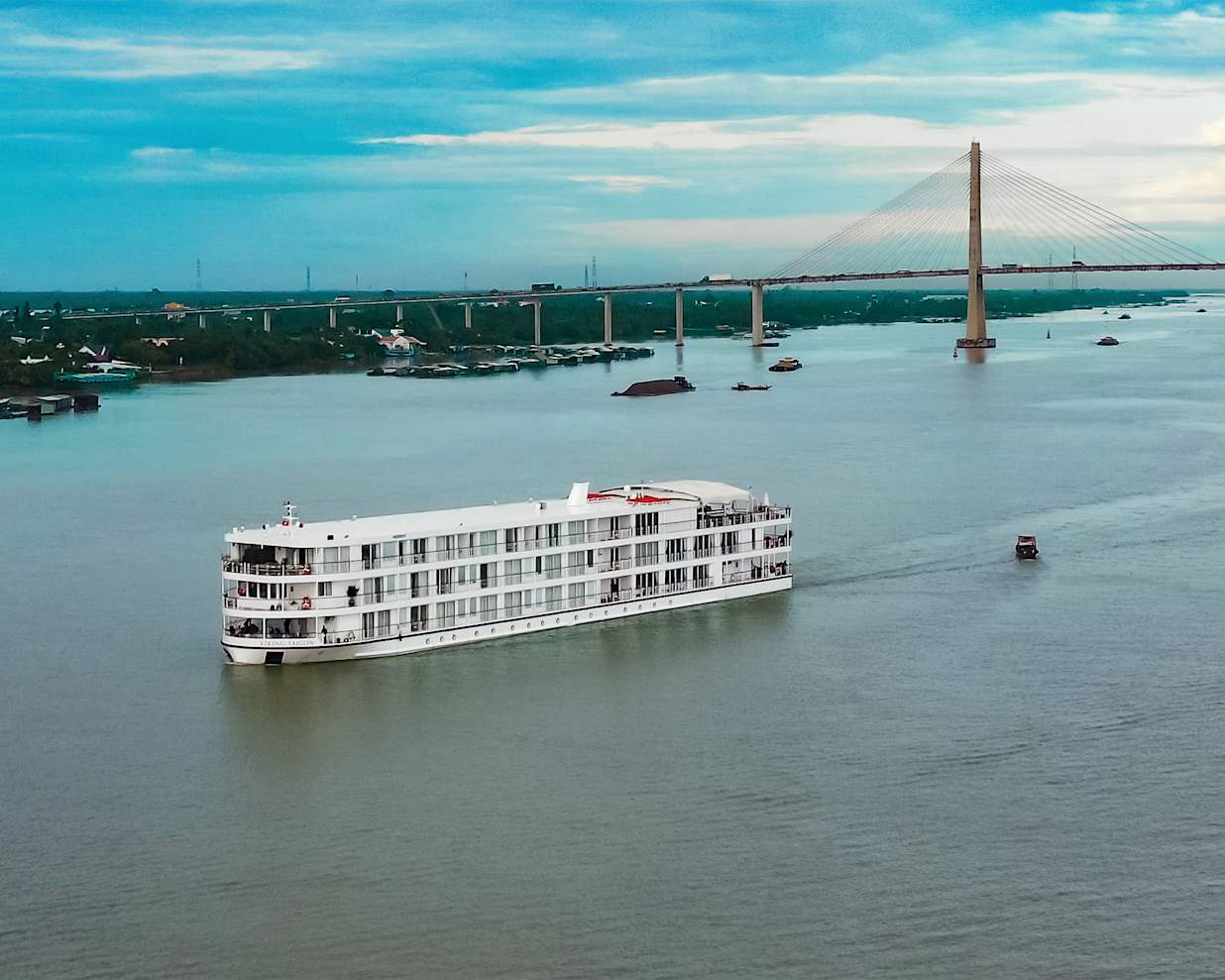
As the world's leading river cruise line, Viking operates a fleet of state-of-the-art Viking Longships specifically engineered for Europe's major waterways. These vessels feature a patented square bow and hybrid engines designed for quiet, smooth navigation.
With floor-to-ceiling panoramic windows in public spaces and private balconies in staterooms, guests enjoy constant visual contact with passing countryside and fairytale castles, guaranteeing a completely motion-free holiday.
Riviera Travel
A firm favourite among UK holidaymakers, Riviera Travel operates five-star, Swiss-built river ships that act as luxury floating boutique hotels.
Vessels like Riviera Radiance and Riviera Resplendence feature spacious suites, panoramic observation lounges, and sun decks designed for effortless sightseeing along calm waterways.
Over 80% of staterooms feature French or full balconies, allowing guests to relax in fresh air while gliding smoothly past medieval towns without a hint of wave action.

Avalon Waterways
Famous for its innovative "Suite Ships," Avalon Waterways focuses heavily on panoramic views and open-air living. Staterooms feature wall-to-wall, floor-to-ceiling sliding glass windows that open to create a unique Open-Air Balcony.
Because the beds face the windows, guests can lie back and watch riverbank scenery glide past from a stable, stationary bed, making it a peaceful sanctuary for anyone concerned about motion.

Modern Mega-Ships with Advanced Stabilisers
If you prefer the grand scale, extensive entertainment, and vast dining choices of ocean ships, vessel size and technology make a massive difference. Modern mega-ships are equipped with state-of-the-art, computer-operated active fin stabilisers.
Extending from beneath the hull underwater, these stabilisers automatically adjust their angle to counteract wave motion, eliminating up to 90% of a ship's natural roll.

Royal Caribbean's Icon Class & Oasis Class
At nearly 250,000 gross tons, Royal Caribbean's Icon Class ships - including Icon of the Seas, Star of the Seas, and Legend of the Seas - are the largest cruise vessels in the world.
Their massive displacement, ultra-wide beams, and advanced propulsion systems make ocean motion virtually imperceptible to passengers.
Similarly, Oasis Class ships like Utopia of the Seas and Wonder of the Seas offer unprecedented stability, featuring open-air neighbourhoods like Central Park positioned right in the middle of the vessel.

MSC Cruises' World Class
MSC Cruises' revolutionary World Class ships, including MSC World Europa and MSC World America, combine cutting-edge LNG propulsion with advanced hull-dampening technology.
Their futuristic Y-shaped aft and plumb bow designs allow them to cut through sea swells smoothly, providing exceptional stability across the Mediterranean and Caribbean.

Celebrity Cruises' Edge Class
Celebrity Cruises' Edge Class fleet - featuring Celebrity Beyond, Celebrity Apex, and Celebrity Ascent - is engineered with distinctive parabolic hulls and advanced stabiliser systems.
These technological enhancements deliver exceptionally smooth ocean crossings, allowing guests to enjoy resort-style amenities without feeling the movement of the sea.

Sheltered Ocean Routes with Glass-Like Waters
Selecting the right geographic itinerary is just as important as choosing the right ship. Certain coastal regions are naturally shielded from open-ocean swells by surrounding islands, mountains, and landmasses, creating remarkably smooth sailing conditions.

Alaska's Inside Passage
The Inside Passage of Southeast Alaska is famous among cruisers for its calm, protected waters. Flanked by majestic fjords, lush rainforests, and offshore islands, this marine highway blocks the rough swells of the Pacific Ocean.
Sailings departing out of Vancouver are particularly smooth, as ships remain safely tucked behind Vancouver Island for the majority of the voyage.

The Norwegian Fjords
While crossing the North Sea can occasionally bring choppier weather, the internal waters of the Norwegian Fjords themselves are exceptionally placid.
Once your ship glides past the coastal threshold into deep inlets like Geirangerfjord or Sognefjord, the water becomes as still as a mountain lake.

The Western Mediterranean in High Summer
During the peak summer season, the sheltered basin of the Western Mediterranean generally offers warm, tranquil waters.
Port-to-port distances between iconic destinations like Barcelona, Marseille, Florence, and Rome are short, meaning ships spend less time travelling across open sea.

Strategic Cabin Placement to Prevent Motion
Where you sleep on the ship can dramatically influence how much movement you perceive. To set yourself up for a motion-free holiday, consider these key cabin selection rules:
Midship and Lower Decks
A cruise ship pivots around its centre point. Staterooms located midship (halfway between the bow and the stern) experience the least amount of vertical and side-to-side motion.
Choosing a cabin on a lower deck places you closer to the ship's centre of gravity, minimising any sensation of movement.

Balcony Staterooms for Fresh Air and Horizons
Having immediate access to a private balcony provides two natural remedies for seasickness: cool, fresh air and an unobstructed view of the horizon.
Looking at a fixed, stable horizon line allows your brain to reconcile visual cues with the inner ear, quickly resolving mild nausea.

Port-Intensive and Short No-Fly Taster Voyages
If you are new to cruising and want to test your comfort level before committing to a longer voyage, port-intensive itineraries and short no-fly mini-cruises are ideal.
Port-intensive routes dock at a new destination almost every day, significantly reducing time spent sailing at night.
Meanwhile, two- to four-night no-fly taster cruises departing from UK ports like Southampton allow you to experience modern ship amenities and gauge your sea legs on a low-risk getaway.
Author: Naomi Allen
Role: Junior Content Editor
Why book with Cruise.co.uk?
The cruise experts
- Established in 1984
- Your own dedicated expert cruise consultant
- Unrivalled cruise knowledge and unbiased advice
- Personal tailor-made service
Best price guarantee
- Early bird access to the best offers
- No hidden extras
- Best price reassurance with our Price Match Guarantee
- Low deposits and flexible payment options
Widest range of cruises
- Easy to find all the latest deals
- Exclusive range of curated Cruise & Stay holidays
- Choose Tailor-made or Bucket list Cruise & Stay Collections
- Escorted Tours Available
Book with confidence
- UK-based company
- Award-winning service
- Our customers have rated us 5‑star on Trustpilot
- ABTA / ATOL protected for your peace of mind
Get help from people who love to cruise
Opening hours
| Mon - Sat | 9am - 10pm |
|---|---|
| Sun | 10am - 9pm |
Sign up for our newsletter
For further details, please read our privacy policy





Registered Office: Grosvenor House, Prospect Hill, Redditch, B97 4DL, UK Company Reg Number: 01827977 © 2026 Cruise.co.uk. All Rights Reserved